
 It is important for all Internet users to be aware of the rules governing the use and distribution of copyrighted material that is owned by others. As a general rule, it is not allowed to use someone’s work without the author’s permission or without the permission of the copyright holder who owns the rights to this material.
The author of a work has property rights that specify whether or not his or her work may be used by others. This includes, for example, the reproduction of text or the use of an image by others.
If you want to use someone else’s content, you must first obtain permission from the content owner. However, some websites may allow you to use their content if you provide a link to the source of the material, but only if the website owner has indicated such use on the website itself.
If the material you are going to use contains the author’s initials or pseudonym, you must make sure to mention this when using this material. These are the personal non-property rights of the author.
If there is no permission to use the content, even if a link to the author’s page is provided, the user is not allowed to use the content, as this would be a copyright infringement.
Why is it important to protect your rights to content on the Internet?
- Copyright protection: When you create content, it becomes a part of you and your work. By protecting the rights to your content online, you preserve your authorship and prevent theft of your rights,
- Financial losses: If your content is used without your consent, you may lose potential revenue that could have been generated by selling or licensing such content.
- Quality preservation: controlling the use of your content allows you to ensure quality and avoid distortions that can occur when unauthorized use of content occurs,
 Maintaining your reputation: Your reputation can be damaged if your content is used in inappropriate contexts or modified without your permission,
- Protection of creative efforts: protecting your rights to content on the Internet allows you to preserve your own creative efforts invested in the creation of this content and prevent unlawful or unauthorized exploitation of your work,
- Legal consequences: use of content without the author’s consent may lead to legal consequences, such as lawsuits, claims with penalties,
- Ethical issues: unauthorized use of content violates the personal rights of authors and property rights to creativity, which is unethical and unacceptable.
Therefore, it is very important to take care of protecting your rights to content on the Internet.
How do you know if your content is being stolen?
- Search regularly: use search engines to find your content by name or unique phrases. If you find your content on other sites without permission, it was most likely taken without your consent,
- Use plagiarism detection tools: There are various online tools available to detect plagiarism. These tools can compare your content with other online content and note any similarities,
- Monitor website traffic: If you notice a sudden increase in traffic to your website from an unknown source, it may indicate that your content has been shared or stolen without your consent.
- Create Google Alerts: You can set up Google Alerts for specific phrases or content from your website. They will notify you when this content is published online, allowing you to monitor any unauthorized use,
- Check social media: Monitor social media platforms for posts or sharing of your content without proper attribution or permission. You can also use reverse image search tools to check if your images are used on other websites.
If you notice that your content has been stolen, there are several tools that can help you restore your already violated rights.
- DMCA
The term DMCA stands for the Digital Millennium Copyright Act.
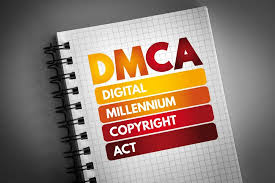 The DMCA provides legal protection and limits the liability of Internet service providers and online platforms for hosting or distributing copyrighted material. The law also contains provisions to combat online copyright infringement, including takedown and counter-notices, and creates a process for online service providers to comply with copyright law.
The DMCA offers tools to protect against online copyright theft. In the event of unauthorized copying, the DMCA can be used to provide a comprehensive set of services to remove illegally posted content from a website, regardless of where it is registered.
- Google Alert
Google Alert is a free online tool from Google that allows you to track certain search terms or phrases of your choice on the Internet.
Google Alerts can be a useful tool for tracking your own content or brand mentions,
To set up a content theft alert, simply enter a piece of content into the tool and choose the frequency of notifications: daily, weekly, or regular.
 Google Copyright Removal
Google Copyright Removal is a service provided by Google that allows owners of copyrighted material to request the removal of infringing content from Google search results. The tool is available to copyright holders who believe that their copyrighted material is being used without their permission on web pages indexed by Google. Upon receipt of the request, Google will review it and take the necessary measures, which may include removing the infringing content from search results or disabling access to it. The purpose of this tool is to help copyright owners protect their intellectual property rights on the Internet.
If your rights have been violated and you need legal assistance, please contact us, we will be happy to help you resolve the situation and do everything necessary to protect or restore your rights.
content protection / copyright / DMCA / Google Alert / Google Copyright Removal / intellectual property


